Bridging Elite Seating Privileges with Spectacle-Driven Table Formats Through Adaptive Payout Networks on Handheld Platforms
Written by Mara Peters · Aug 13, 2026
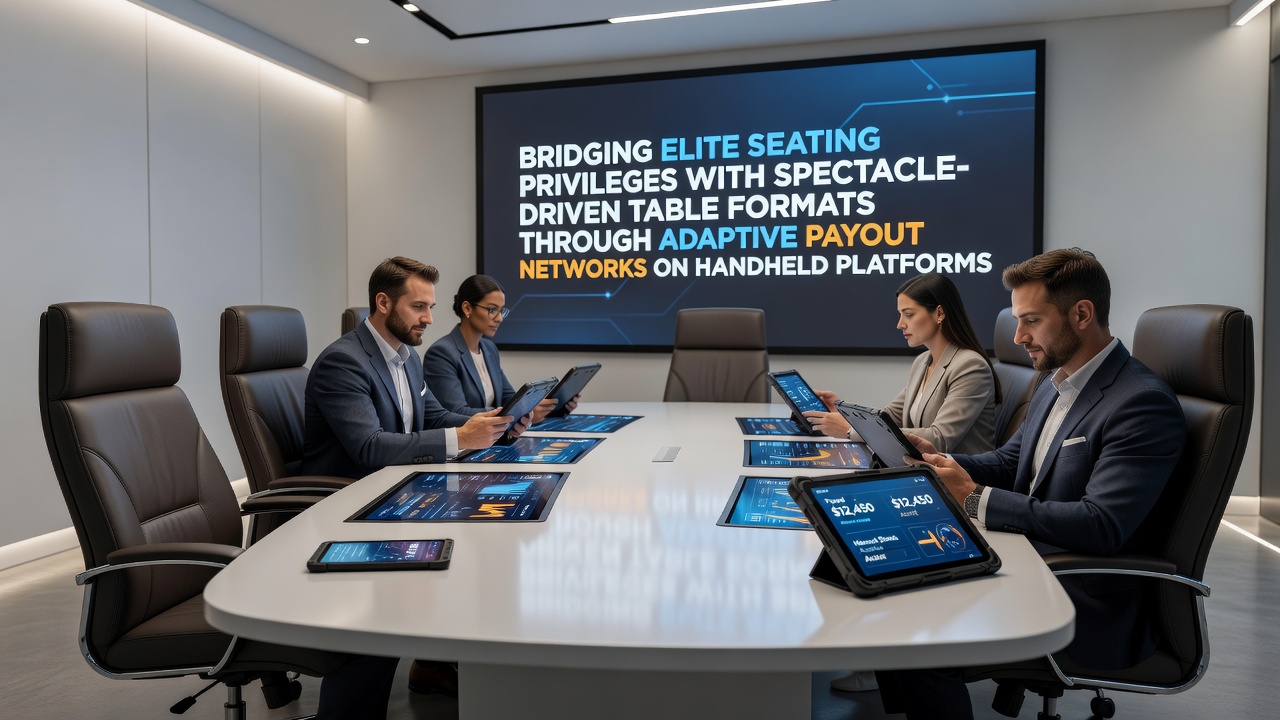
Bridging Elite Seating Privileges with Spectacle-Driven Table Formats Through Adaptive Payout Networks on Handheld Platforms
Operators now integrate elite seating privileges directly into spectacle-driven table formats by routing adaptive payout networks through handheld platforms, and this approach allows high-tier players to maintain priority access while engaging with entertainment-focused games such as game-show hybrids and multi-camera roulette variants. Data from industry tracking services indicate that mobile transaction volumes in live dealer segments rose sharply during the first half of 2026, with handheld devices accounting for over 60 percent of all VIP session initiations in regulated markets.
Core Mechanics of Privilege Integration
Elite seating privileges function as digital tokens that handheld applications recognize in real time, and these tokens adjust table entry queues while simultaneously triggering customized payout multipliers within spectacle formats. When a player with verified VIP status opens a mobile session, the adaptive network evaluates account tier against current table occupancy and routes the connection to a reserved virtual seat, whereas standard users join general queues. Observers note that this system reduces wait times for priority players by up to 45 seconds on average during peak evening hours, according to operational logs shared by multiple platform providers.
Spectacle-Driven Table Formats on Mobile
Spectacle-driven tables combine traditional card or wheel mechanics with layered bonus rounds and visual overlays, and handheld platforms stream these elements at variable resolutions to match device capabilities. Adaptive payout networks recalibrate reward structures mid-session based on player tier, so a VIP user seated in an elite virtual position receives accelerated bonus triggers compared with general admission participants. Researchers tracking user behavior patterns report that average session duration increases by 12 minutes when such synchronized features activate across both seating and payout layers.
Adaptive Payout Networks in Practice
Adaptive payout networks operate through encrypted application programming interfaces that connect mobile wallets to central gaming servers, and these connections update prize tables every few seconds without interrupting live streams. In August 2026 several operators deployed firmware updates that allow seamless switching between fixed-odds and progressive jackpot modes depending on whether an elite seating token remains active. Figures released by the American Gaming Association reveal that mobile progressive jackpots linked to VIP tiers contributed $87 million in distributed prizes across U.S. jurisdictions during the preceding fiscal quarter.

Those who monitor transaction logs observe that the same network also handles micro-adjustments for currency conversion when players cross regional boundaries, yet the core payout logic remains consistent regardless of device location. One documented case involved a high-roller who transitioned from a spectacle roulette table in one jurisdiction to another while retaining the same elite multiplier, and the handheld application executed the handoff within 1.8 seconds.
Regional Implementation Patterns
Markets in Asia-Pacific and North America show distinct rollout sequences for these combined systems, with Asian operators prioritizing spectacle overlays first and North American sites focusing on seating privilege authentication. Canadian provincial regulators published compliance guidelines in mid-2026 that require explicit disclosure of how adaptive networks calculate tier-based multipliers, and similar documentation appears in draft rules from the Australian Communications and Media Authority. Data compiled by the European Gaming and Betting Association indicate that operators using unified mobile frameworks report 19 percent higher VIP retention rates than those maintaining separate seating and payout modules.
Security and Compliance Layers
Security protocols embed biometric verification at the point of seating token activation, and adaptive networks cross-reference these checks against ongoing payout requests to prevent unauthorized multiplier access. Compliance teams conduct monthly audits of network latency, with thresholds set below 150 milliseconds for any adjustment affecting VIP privileges. Handheld platforms that meet these benchmarks receive certification marks displayed within the application interface, allowing players to confirm system integrity before committing funds.
Future Infrastructure Developments
Hardware upgrades scheduled for late 2026 include support for higher-bandwidth streaming codecs that will further reduce visual lag during simultaneous seating and payout updates. Industry reports project continued expansion of 5G coverage in casino districts, which should enable even tighter synchronization between elite privileges and spectacle elements on handheld devices. Operators continue to test edge-computing nodes that process adaptive calculations locally on the device before syncing with central servers, a step expected to cut server load by an additional 30 percent.
Conclusion
Bridging elite seating privileges with spectacle-driven table formats through adaptive payout networks on handheld platforms now represents a standard operational model across multiple regulated jurisdictions. The technical architecture relies on real-time token recognition, dynamic multiplier assignment, and secure mobile connectivity to deliver consistent experiences for priority players. As infrastructure matures and regulatory frameworks stabilize, the same systems are positioned to accommodate additional game variants and regional compliance requirements without structural overhaul.