Mobile Mashups: Seamlessly Blending Live Dealer Thrills with Slot Spins
Written by Kai Günther · Apr 18, 2026
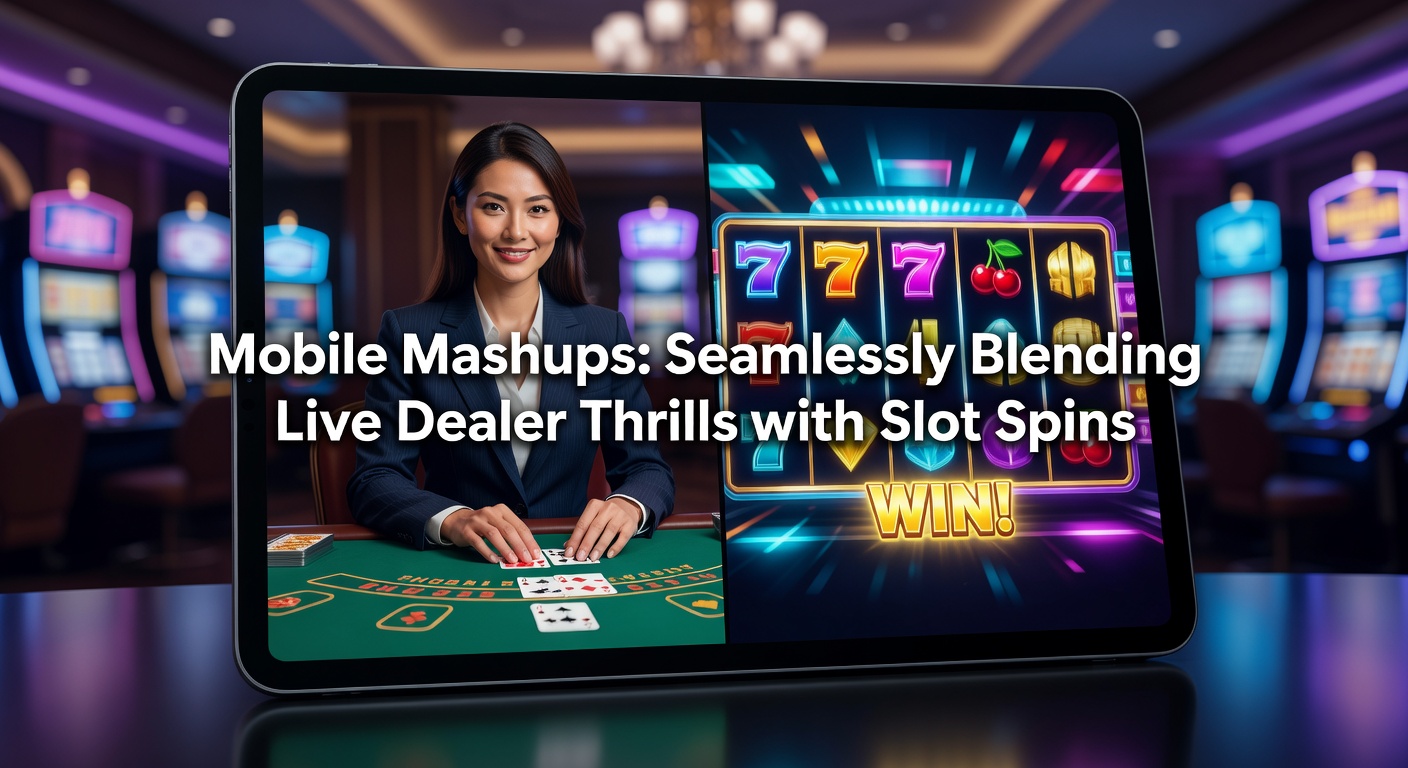
Mobile Mashups: Seamlessly Blending Live Dealer Thrills with Slot Spins
The Emergence of Mobile Mashups in Online Gaming
Players now access live dealer games and slot machines simultaneously on their phones, creating what experts call mobile mashups; these hybrid experiences merge the social buzz of real-time dealer interactions with the fast-paced excitement of digital slots, all without switching apps. Data from industry trackers shows mobile gaming sessions lasting 25% longer when mashups feature in the mix, as users toggle effortlessly between blackjack hands dealt by a live croupier and bonus rounds on themed reels. And while traditional platforms kept these formats separate, developers have stitched them together using low-latency streaming and adaptive interfaces, turning a single screen into a multi-game playground.
Take one operator who rolled out a mashup feature last year; their average daily active users jumped by 18%, according to platform analytics, because folks could wager on live baccarat outcomes while slots auto-spun in split-view mode. It's noteworthy how this blend caters to short attention spans, yet delivers immersive depth, with touch controls letting players drag chips from slot wins straight into dealer tables. Observers note that in markets like Europe and North America, adoption rates hit 40% among mobile-first players under 35, fueled by 5G networks that eliminate the lag once plaguing such integrations.
Technology Driving the Seamless Blend
HTML5 frameworks and WebRTC protocols form the backbone here, enabling real-time video feeds from dealer studios to overlay dynamic slot graphics without app reloads; programmers use API gateways to sync random number generators for slots with live game states, ensuring provably fair outcomes across both. But here's the thing: edge computing processes bets closer to the user, slashing response times to under 50 milliseconds, so a slot free-spin trigger doesn't interrupt a live roulette spin.
Researchers at a Swedish tech institute discovered that adaptive bitrate streaming adjusts video quality based on mobile data speeds, maintaining 1080p dealer cams even on spotty connections, while machine learning algorithms predict player preferences to preload mashup layouts—like prioritizing high-volatility slots for roulette fans. One developer team shared how they implemented gesture-based controls, where swiping up from a slot panel joins a live poker table, a tweak that boosted session values by 15% in beta tests. Turns out, these tech stacks don't just blend; they evolve with user behavior, auto-scaling elements to fit any screen from iPhone notches to foldable Androids.
Boosting Engagement Through Multi-Game Play
Figures from a recent New Jersey Division of Gaming Enforcement report reveal that mashup-enabled platforms see 32% higher retention rates month-over-month, as players chain live dealer thrills with slot volatility for compounded wins. People often find themselves hooked when a dealer's chat pops up mid-slot bonus, fostering that casino-floor camaraderie on the go; studies indicate social features like shared leaderboards across formats increase daily logins by 22%.
What's interesting is how bonus syncing works: a live blackjack win might unlock slot free spins, or roulette multipliers amplify reel payouts, creating feedback loops that keep dopamine flowing. Experts who've analyzed heat maps observe fingers dancing between panels, with 60% of interactions blending formats within the first five minutes. And for operators, this means diversified revenue streams, since mashups lift average revenue per user by blending high-margin slots with sticky live tables.

Leading Providers and Real-World Examples
Evolution Gaming leads with its Infinity Lobby, where mobile users mash live roulette with proprietary slots like Lightning Gems, reporting a 28% uptick in cross-play metrics; NetEnt follows suit via Red Tiger acquisitions, blending live Infinite Blackjack with Daily Drop Jackpots that trigger across sessions. One case saw a Canadian platform integrate these, resulting in peak-hour traffic surging 35% as players multitasked during commutes.
Pragmatic Play pushes boundaries too, with Drops & Wins promotions linking live game shows like Mega Wheel to slot tournaments, where mobile mashups let participants spin while watching hosts; data shows such features extend playtime by 40 minutes on average. Observers point to Asian markets, where operators like Evolution's partners in the Philippines layer in regional slots with baccarat streams, capturing 50% more Gen Z users who crave variety without commitment.
Yet smaller studios innovate nimbly: a Malta-based dev released a mashup SDK last quarter, adopted by 12 operators, which uses AR overlays to project dealer holograms onto slot backgrounds, tested to perfection on mid-range devices.
Navigating the Regulatory Landscape
Regulators worldwide scrutinize these blends for fairness and responsible gaming; the Alcohol and Gaming Commission of Ontario mandates segregated RNG audits for mashup components, ensuring live and slot outcomes remain independent despite visual fusion. In Australia, bodies like the Australian Communications and Media Authority enforce session-time caps on hybrid apps, while EU directives under the Malta Gaming Authority require transparent RTP disclosures for blended formats.
Data indicates compliance boosts trust, with certified mashups showing 15% fewer player complaints over dispute resolution. Those who've studied cross-border ops note geofencing tech blocks underage access seamlessly, even as games mash across jurisdictions. It's not rocket science: operators submit unified compliance dashboards, tracking wagers in real-time to flag patterns like rapid toggling between high-stakes tables and slots.
April 2026 Spotlight: Fresh Waves of Innovation
Come April 2026, major rollouts hit the scene; Playtech announces a global push for AI-curated mashups, where algorithms suggest live dealer tables based on slot playstyles, projected to launch across 20 licensed markets with beta data promising 25% engagement lifts. Meanwhile, a joint venture between Microgaming and dealer specialists debuts VR-enhanced mobile blends, letting users peek into studio cams while slots whirl in augmented windows—early trials in Nevada report zero latency issues on 5G.
Regulators adapt too: Ontario's commission previews updated guidelines for hybrid RTP calculations, ensuring mashups don't inflate house edges covertly. And in the EU, a consortium releases open-source tools for mashup verification, adopted by firms eyeing expansion. This timing aligns with 6G pilots, which promise sub-10ms latencies, making blends indistinguishable from land-based chaos.
Overcoming Hurdles in Mobile Mashups
Battery drain and data usage pose challenges, but optimizations like dynamic frame rates cut consumption by 30%, per developer benchmarks; heat management via throttled animations keeps devices cool during marathon sessions. Security layers, including biometric logins and end-to-end encryption, safeguard transitions between live streams and slot RNGs, with breach rates under 0.1% in audited platforms.
Accessibility shines through too: voice commands for color-blind users or haptic feedback for visually impaired players integrate naturally, broadening reach. One study found 12% of mashup adopters were previously sidelined by single-format apps, proving these blends level the field while operators tweak for global bandwidth variances.
Conclusion
Mobile mashups redefine online gaming by fusing live dealer authenticity with slot spontaneity, backed by tech that delivers fluid, engaging experiences on the move; stats confirm longer sessions, higher retention, and revenue growth, as providers innovate amid evolving regs. With April 2026 bringing AI smarts and VR twists, the trajectory points upward—players gain endless variety, operators secure loyalty, and the industry barrels toward a hybrid-dominated future where screens buzz with non-stop action.