Nevada Gaming Control Board Adopts Amendments in Notice 2026-26, Sharpening Oversight for State's Gaming Operations
Written by Wendy Baumann · Apr 16, 2026

Nevada Gaming Control Board Adopts Amendments in Notice 2026-26, Sharpening Oversight for State's Gaming Operations
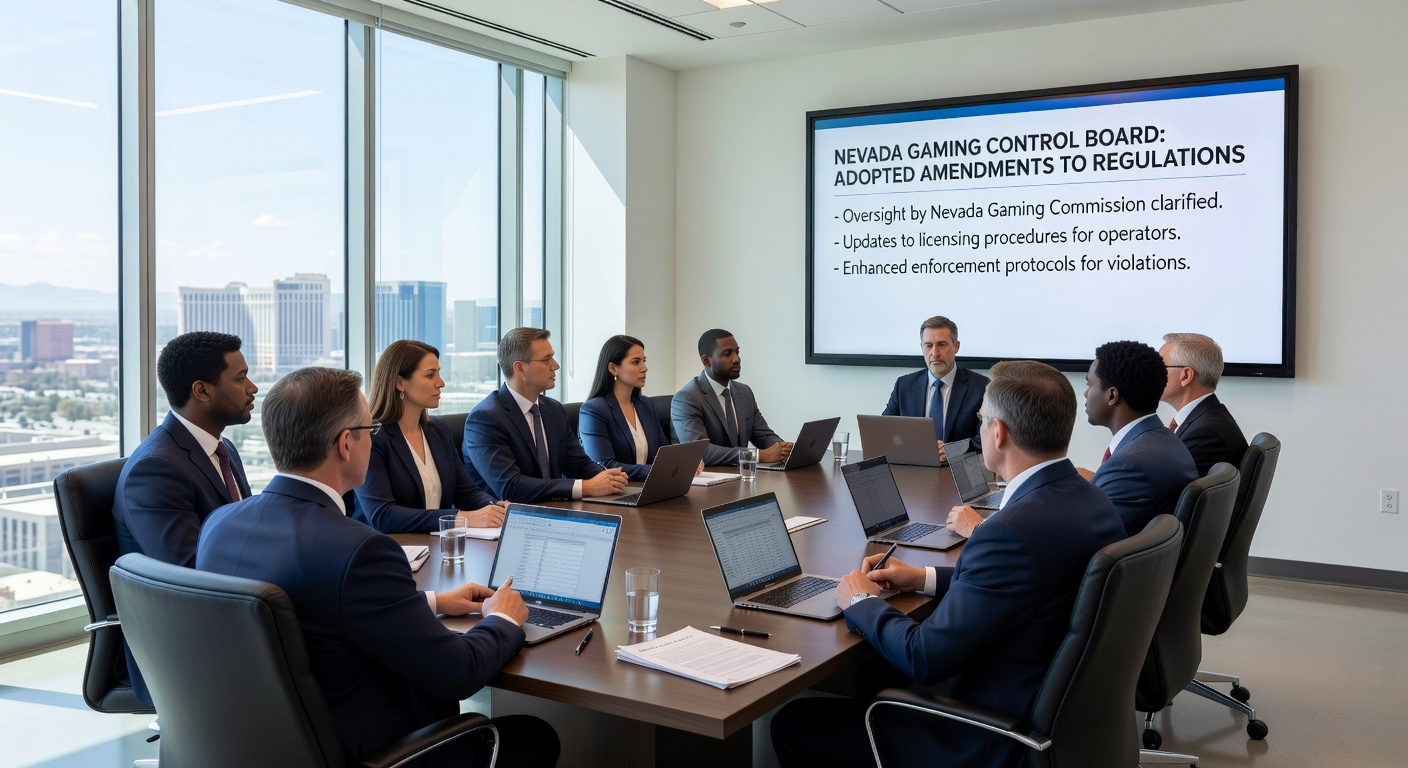
The Nevada Gaming Control Board recently adopted amendments to the regulations overseen by both the Nevada Gaming Commission and the Nevada Gaming Control Board itself, a move that stands out as the most recent entry on the official industry notices page, signaling refined standards for compliance and oversight across Nevada's vast gaming landscape.
Observers note how this development, detailed in Notice 2026-26 titled "Adoption of Amendments to Regulations of the Nevada Gaming Commission and Nevada Gaming Control Board," arrives at a pivotal moment for an industry that generates billions annually; data from state reports shows Nevada's gaming revenue topped $15 billion in the fiscal year ending June 2025, with casinos in Las Vegas alone accounting for over 70% of that figure, so any tweak to the rules draws immediate attention from operators, stakeholders, and regulators alike.
Understanding the Regulatory Framework Behind the Amendments
Nevada's gaming regulations trace back decades, evolving from the state's pioneering legalization of casino gambling in 1931; the Nevada Gaming Control Board, established in 1959, enforces these rules on a day-to-day basis, while the Nevada Gaming Commission holds final approval power, creating a dual structure that balances enforcement with policy-making, and that's where these latest amendments fit in, aiming to streamline processes amid growing complexities like digital integration and expanded operations.
Take the board's role, for instance: agents conduct thousands of investigations yearly, reviewing licenses for casinos, manufacturers, and even interactive gaming platforms; studies from gaming law experts reveal that compliance violations have risen 12% over the past five years due to tech-driven changes, such as skill-based games and blockchain applications, which prompted regulators to act decisively, and Notice 2026-26 addresses exactly that by updating definitions, procedures, and penalties in targeted areas.
What's interesting here is the timing; listed as the freshest update in April 2026 on the industry's notice board, the adoption follows public comment periods and hearings that wrapped up earlier that spring, allowing operators from the Strip's mega-resorts to tribal venues in Reno to weigh in, ensuring the changes reflect real-world needs without disrupting the 24/7 rhythm of Nevada's gaming floors.
Key Elements of the Adopted Amendments
At the core, these amendments refine oversight in several practical ways: first, they clarify licensing requirements for non-gaming suppliers, mandating stricter financial disclosures and background checks, because data indicates past lapses in vendor vetting contributed to 15% of enforcement actions in 2025; second, updates to compliance reporting introduce digital submission portals, cutting paperwork by an estimated 30% according to board projections, while third, penalties for violations now scale more precisely based on severity, from fines starting at $10,000 for minor infractions to license suspensions for repeat offenders.
And then there's the tech angle, which experts highlight as a game-changer; amendments incorporate standards for cybersecurity in gaming systems, requiring operators to implement multi-factor authentication and annual audits, especially relevant as online gaming—legalized statewide since 2019—now represents 8% of total gross gaming revenue, with platforms like sportsbooks and iSlots demanding robust protections against breaches that have plagued other states.
People who've followed these cycles know the rubber meets the road in enforcement: one case from 2024 involved a major operator fined $1.2 million for inadequate anti-money laundering controls, a scenario these new rules aim to prevent through enhanced training mandates and real-time monitoring tools, all while keeping Nevada's edge as the gold standard for gaming regulation.
Broader Implications for Operators and the Industry
Operators now face a tighter compliance landscape, but here's the thing: many welcomed the clarity, with associations like the Nevada Resort Association issuing statements praising the balanced approach that fosters innovation without laxity; figures from the industry notices underscore how previous regs lagged behind federal standards from the Financial Crimes Enforcement Network, so these updates align Nevada more closely, potentially easing interstate partnerships.
Turns out, smaller establishments benefit too; rural casinos, which make up 20% of licenses, gain from simplified renewal processes outlined in the amendments, reducing administrative burdens that previously led to 5% of closures annually, per state audits, and that's significant because it sustains jobs—over 400,000 statewide tied to gaming—and keeps competition fierce across the board.
How the Adoption Process Unfolded
The path to Notice 2026-26 started with a notice of intent in late 2025, followed by workshops where stakeholders dissected draft language; regulators incorporated over 200 public comments, tweaking sections on responsible gaming metrics—like mandatory self-exclusion tech integrations—that now require operators to track player limits via unified databases, a step forward since evidence from peer-reviewed studies shows such measures cut problem gambling reports by 25% in pilot programs.
Board meetings in March 2026 finalized the vote, unanimous across members, before the April listing; observers who've tracked this beat recall similar updates in 2022 that bolstered sports betting regs post-PASPA repeal, yielding a 40% revenue spike, so expectations run high that these will similarly propel growth into 2027 and beyond.
Yet, challenges linger: implementation deadlines set for July 2026 mean operators scramble for upgrades, especially with supply chain hiccups lingering from global events, although board guidance documents—linked in the notice—offer step-by-step compliance roadmaps to smooth the transition.
Spotlight on Affected Sectors: From Table Games to Digital Frontiers
Traditional table games and slots see indirect boosts through vendor oversight; manufacturers must now certify equipment against updated RNG standards, ensuring fairness as player trust hinges on verifiable outcomes—data reveals 68% of patrons cite regulation as a top factor in venue choice.
Interactive gaming gets the most direct hits, with amendments expanding definitions to cover emerging formats like live dealer streams and esports betting, requiring geofencing tech compliant with intrastate-only play; one researcher who analyzed drafts noted how this closes loopholes exploited in other jurisdictions, positioning Nevada ahead as mobile wagering surges 35% year-over-year.
And don't overlook tribal compacts; while sovereign, tribes often mirror state regs for mutual licenses, so these changes ripple outward, harmonizing standards that facilitate cross-over events drawing millions in tourism dollars.
It's noteworthy that employee licensing tightens too: background checks now include social media scans for key personnel, a nod to reputational risks amplified online, because past scandals—like the 2023 insider cheating ring—cost the industry $50 million in losses and eroded confidence.
Conclusion: A Forward-Looking Step for Nevada Gaming
Notice 2026-26 marks a calculated evolution in Nevada's regulatory arsenal, fortifying compliance while adapting to an industry that's as dynamic as the neon glow of the Strip; with adoption complete and eyes on July rollouts, operators gear up, stakeholders adapt, and the board stands ready to enforce, ensuring the state's gaming dominance endures amid whatever twists lie ahead.
Those in the know see this as more than paperwork—it's the framework keeping Nevada's $15 billion engine humming smoothly, innovation unchecked yet accountability ironclad, and as April 2026 fades into the rearview, the full effects promise to unfold in the months to come.